
Attendance after hours: $80–$180
The figure that gets a licensed plumber to your door at night. Quotable on the phone, every time.
The first thing that happens is not a booking. It is a plumber telling you what to shut off right now, because the minutes before anyone arrives are where most of the damage is either done or prevented.
After-hours work is not the same trade as daytime work. The parts have to be on the van because no supplier is open, the diagnosis has to be right first time because there is no second attendance that night, and the person answering the phone has to be able to tell a genuine emergency from something that is cheaper on Monday.
That last part matters more than it sounds. Telling you a job can safely wait costs us the callout and saves you a premium, and it is the fastest way to know whether the outfit you have rung is worth using again.
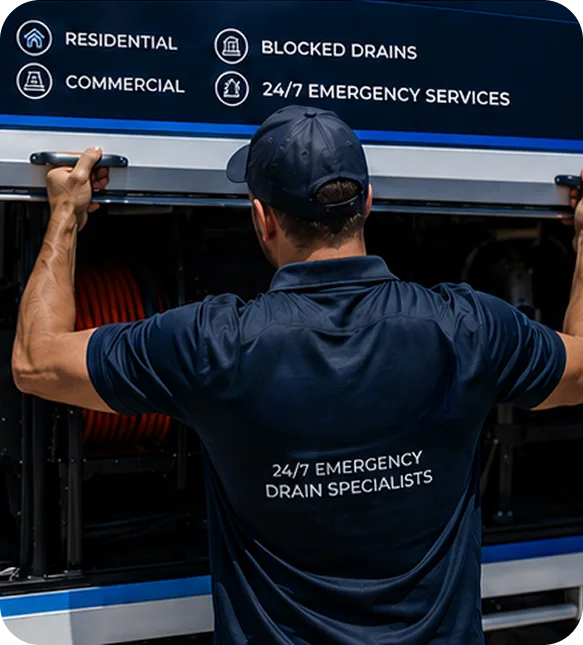

Larger garden blocks and townhouse sites run long drainage lines, so one blockage needs a camera and the right access to clear properly.
Before anything else, work out whether the failure sits inside your lot or on common property, because that decides who authorises the work and who is billed. As a rule of thumb: a fixture, a tap or pipework serving only your apartment is usually yours; a stack, a shared sewer line or a stormwater pit serving the building is usually the owners corporation's.
If it is after hours and the building manager is unreachable, we attend, make it safe, and write the report so it names the line and the lot. That report is what settles the invoice question later, and it is far easier to produce on the night than to reconstruct a fortnight afterwards.
Steep driveways, stairs down to the door, and no clear place to park all cost minutes in daylight and more after dark.
Lindfield’s bush-fringed blocks near the Lane Cove valley collect leaf litter that clogs stormwater pits and backs them up in heavy rain.
It helps enormously if someone can meet the crew at the street with a light on. And if your property has a hard access point — a locked side gate, a shared drive, a set of steps that is the only way in — tell us on the phone rather than when we arrive. It changes what comes off the van and how.
A yard that floods in every serious downpour is a different problem from one that flooded once in a freak storm. The first is a blocked or undersized line and it will keep happening; the second is weather.
Telling them apart takes a camera on a dry day, not a guess in the rain. If it has happened twice, book the inspection between storms — clearing a surcharging pit at the height of it costs more and tells you less.
Many established Lindfield homes still run older clay and earthenware drains that crack and shift with age, inviting roots and debris in.
Clay drainage is laid in short lengths, so a single run has a great many joints, and after decades each one has opened a fraction. The line copes fine at normal flow and stops coping the moment demand spikes, which is why so many of these calls come on a weekend morning or after a full house has been showering.
Clearing restores flow the same night. Whether it holds depends on what the camera finds, and that is worth doing before the next long weekend rather than after it.
The slowest part of an apartment emergency is often not the plumbing — it is the door. Fob access, a basement that needs a resident to open it, a car park with no after-hours entry: any of those can add half an hour while water is still running.
Two things worth doing before you ever need them: find your lot's isolation valve — usually in the laundry or a hallway cupboard — and save the building manager's after-hours number in your phone. Both take five minutes on a calm evening and both save real time on a bad one.
If it is happening right now: stay out of moving water, lift what you can off the floor of the garage, and clear any grate you can reach safely from dry ground. Do not lift a surcharging pit lid — the water underneath is moving faster than it looks.
Once the rain stops, the pit that overflowed usually has a reason, and it is rarely the rain. Silt, roots or a collapsed section will do it, and the difference matters because one of those is a clean-out and the others are a repair.
Leave first, then call. No switches, no flames, no phone calls made inside the building — go outside, take everyone with you, and ring from there.
The number is 131 909: the gas network's emergency line, staffed around the clock. They attend and make the supply safe at no cost to you. Once it is safe, a licensed gasfitter finds and repairs the fault on your side of the meter, and that part is where we come in.
The figure that gets a licensed plumber to your door at night. Quotable on the phone, every time.
Business hours run about $120–$160. The premium is real and every genuine after-hours outfit charges one.
Attendance plus the first stretch of work plus minor parts. An isolated burst, a blocked toilet, a failed valve.
Slab leaks, gas faults, anything structural at 2am. Quoted before it starts, in writing.
The cheapest outcome, and one we give often. Describe it honestly and we will tell you which side of the line it is on.
The price is agreed before work starts, including at 2am. Figures here are indicative of the 2026 Sydney market rather than a quote from us, you get your own number as a fixed price before any work starts.

Not a call centre. You describe what is happening, we tell you what to shut off right now, and whether this genuinely needs someone tonight. Sometimes it does not, and we say so.
The nearest available crew heads for Lindfield with the common failure points already stocked on the van: pipe, fittings, valves, drain gear.
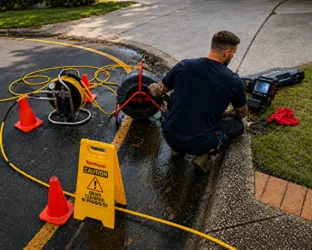
First job on site is stopping the damage: isolate, contain, make safe. Then you get a fixed price for the proper repair before it starts.

Most emergencies are permanently repaired on the spot. If a part has to wait for a supplier, you are left safe, watertight and functioning in the meantime.
Call and describe it. If it can hold, we will tell you, and book you at daytime rates. If it cannot, you will be glad you rang tonight.
Ring us and a plumber picks up. Leave details instead and you will get a callback with an ETA, not a sales call.

Leave your details and our local Lindfield team will call you back fast.